

Four specification categories deserve your attention first: technical performance, application fit, regulatory compliance, and cost. Suppliers list bag valve masks under several names, including manual resuscitator, manual resuscitation bag, ambu bags, and self-inflating systems. Search product specifications under each of these terms before you compare.
Listings often look alike. Delivered volume, valve design, mask sizing, and certification still change safety and ventilation quality. This Bag Valve Mask Specifications Compared guide takes an objective, criteria-based approach rather than endorsing one product. Tianzuo Medical supplies bag-valve-mask (BVM) resuscitators across these categories, so you can match specifications that matter to your clinical setting.
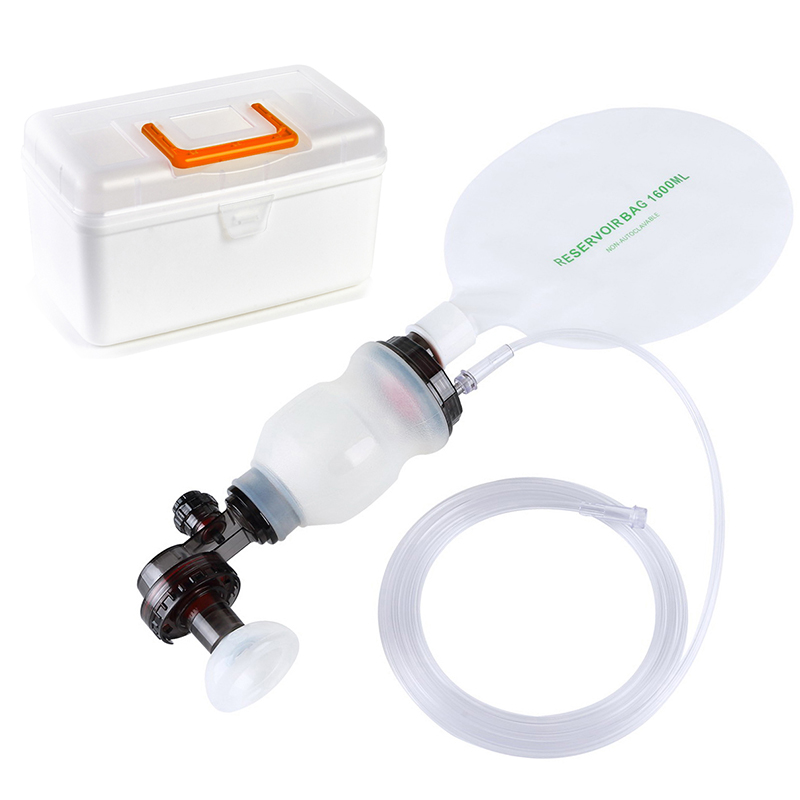
Technical performance separates a bag valve mask that ventilates reliably from one that merely looks adequate on paper. This part of the bag valve mask specifications compared analysis covers delivered volume, refill behavior, and PEEP control.
Tidal volume is the air you move into the lungs with each squeeze. Stroke volume is the volume one full compression of the bag delivers. Delivered volume per squeeze matters more in pediatric care, where small errors carry larger consequences. Adult ventilation targets roughly 500–600 mL for a normal adult male.
Rated volume and delivered volume often diverge. In testing, an adult bag valve mask delivered a mean tidal volume of 807.7 mL, and a pediatric model delivered 630.7 mL. Both exceeded the adult target, which shows why you should compare measured output, not just the printed bag size. Ask suppliers for delivered-volume test data on their bag valve masks and ambu bags.
Bag refill speed shapes your squeeze rhythm. A slow-refilling resuscitation bag forces you to wait between breaths. Bag compliance also changes feel: a stiff bag resists over-squeezing, and a soft bag rewards careful technique. Studies show ventilation quality varies among operators, so training and bag feel matter as much as the numbers.
Positive end-expiratory pressure keeps a small amount of pressure in the lungs at the end of each breath. This pressure helps keep small airways open. A PEEP valve controls that pressure, and the right bag valve mask PEEP valve depends on your protocol.
Fixed valves hold one preset pressure. An add-on adjustable PEEP valve lets you dial the level. A built-in threshold-resistor PEEP valve sits inside the circuit, and a threshold resistor-type PEEP valve design resists flow until the set pressure is reached. Adjustable units offer variable PEEP and variable positive end-expiratory pressure control across a stated valve setting range.
|
Feature |
Fixed PEEP valve |
Adjustable PEEP valve |
|---|---|---|
|
Setting |
One preset level |
Variable PEEP across a range |
|
Best fit |
Protocol-driven, single-level use |
Mixed acuity, changing targets |
|
Verification |
Check pressure with a manometer |
Check pressure with a manometer at each setting |
Check compatibility with the resuscitator before you buy. Confirm the valve fits standard circuits and the bag valve mask specifications compared in your shortlist. Verify pressure with a manometer, because actual pressure versus set value can drift. Pressure is verified with a manometer at the patient connection. Use a pressure manometer to check the accuracy of dial markings. A manometer also confirms the valve holds pressure without leaking. Calibrate each resuscitator against a reference manometer, and log every manometer reading. Keep one manometer per department for spot checks. A spare manometer protects your resuscitator fleet during audits.
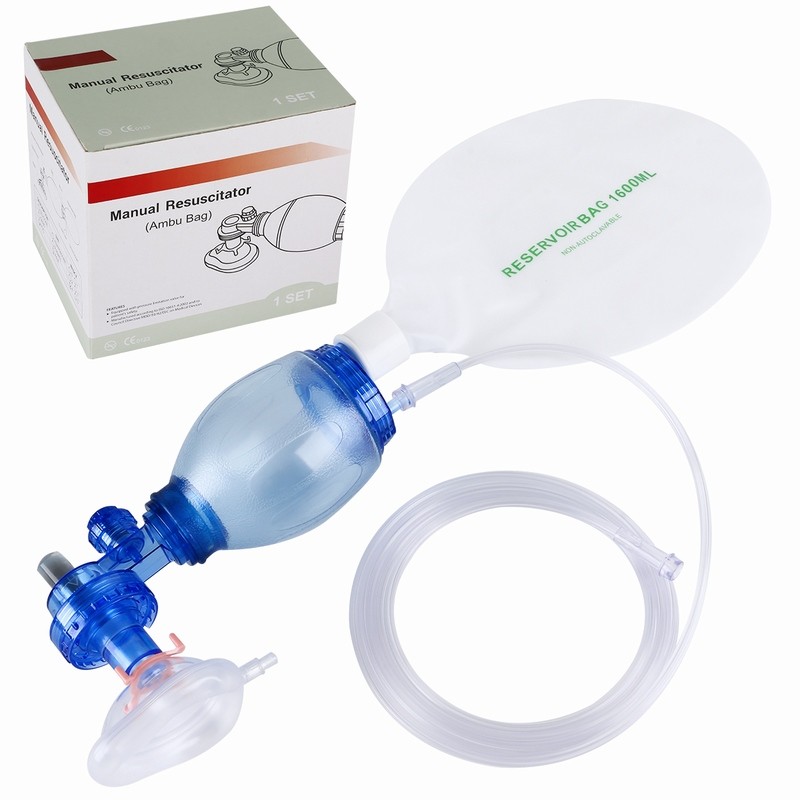
Valve design decides how air moves through a bag valve mask, and materials decide how long the device lasts. Both belong on your comparison sheet.
Single-valve designs route all airflow through one one-way valve. Multi-valve designs separate the patient valve, the intake valve, and the relief valve, so each part does one job. A duckbill valve uses a soft, flattened tube that opens under flow; it is simple and inexpensive, yet it can invert or stick. A flapper valve uses a hinged disc that seats firmly against backflow. Ask which one-way valve your shortlist uses, and price that one-way valve as a spare. Inspect the valve seat for cracks at every cleaning cycle.
A pressure relief valve caps peak airway pressure and protects the lungs from an over-squeeze. Confirm the relief pressure setting matches your patient group. A relief valve that vents too early wastes volume; one that vents too late offers little protection. Some ambu bags ship with a relief valve you can lock off for specific protocols. If you plan to add a PEEP valve, confirm the expiratory port accepts it.
Silicone bags stay flexible in cold storage and survive repeated disinfection. PVC bags weigh less, cost less, and suit single-use protocols. Silicone masks seal well against the face; PVC masks serve short procedures at a lower price. Clear materials let you spot condensation or vomit inside the mask before the next breath. Opaque bags hide fluid, so weigh that trade-off against price.
Material choice also changes feel and lifespan. A silicone bag returns to shape quickly and tolerates many cleaning cycles. A PVC bag feels stiffer and may stiffen further over time. A PEEP valve adds a small part that can go missing, so plan storage. Test the PEEP valve after each reassembly, and record the PEEP setting on your equipment log. A PEEP valve with a clear dial is easier to verify at the bedside. Tianzuo Medical offers silicone and PVC options across its bag valve masks and bag-valve-mask (BVM) resuscitators, so you can match material to call volume and cleaning policy.
Size mismatches cause more ventilation failures than any other specification error. Match the device to your patient population before you compare anything else.
Manufacturers color-code bag-valve-masks by patient group, and adult, pediatric, and infant models differ in bag volume and mask footprint. Read the label rather than trusting the color alone, because conventions vary between suppliers. The mask should cover the bridge of the nose and seat on the chin. A mask that rides above the chin leaks at the jaw line, and a mask that presses on the eyes irritates the patient.
The correct bag-valve-mask size should correlate to patient size. Stock a full range when your patient mix spans children and adults. Standardize on one size only when your service treats a single population, such as adult-only transport. A full range costs more upfront, yet it prevents the dangerous habit of squeezing an oversized bag for a small patient.
Single-use bag valve masks suit resuscitation settings where blood, vomit, and secretions raise cross-infection risk. Discard the unit after one patient and skip reprocessing entirely. Reusable models reward high call volume with durability and a lower cost per use, provided your team follows a validated cleaning protocol. Many services stock single-use units in airway kits and reusable manual resuscitation bag sets in vehicles.
Portability decides field performance. Check packed weight, carry case design, and oxygen reservoir compatibility before you commit. A resuscitation bag that seals poorly in wind or rain undermines every other specification. Tianzuo Medical offers bag-valve-mask (BVM) resuscitators and ambu bags across single-use and reusable categories, so you can compare both against your patient mix and transport conditions.
Certification review protects your procurement decision. Verify these markers before you approve any bag valve mask for clinical use.
|
Marker |
What it confirms |
|---|---|
|
FDA clearance or registration |
The device meets U.S. market requirements |
|
CE marking |
The device meets European market requirements |
|
ISO 13485 |
The manufacturer runs a certified quality management system |
|
ISO 10651-4 |
The manual resuscitator meets the standard for manual resuscitators |
Treat each marker as a starting point, not a finish line. Confirm the certificate covers the exact model you plan to buy. A certificate for one ambu bag does not cover a different size or material in the same catalog. Check the certificate's scope and expiry date against your order.
Request a declaration of conformity for every model on your shortlist. Ask for test reports that show delivered volume, valve performance, and pressure relief behavior. Lot traceability lets you link a device back to its production batch, which matters during a recall or an incident review. Where the device contacts patients, request sterilization or biocompatibility documentation as applicable.
Build a documentation checklist and apply it to every supplier. Store the documents with your purchasing records, and review them at each contract renewal. Tianzuo Medical supports buyers with compliance documentation for procurement audits, including certificates and test records for its bag-valve-mask (BVM) resuscitators and bag valve masks. Compare that documentation package across suppliers, and let the completeness of the paperwork inform your final choice.
Unit price tells you what you pay today. Total cost of ownership tells you what the device costs across its working life. Four drivers shape that total: the purchase price, reprocessing costs for reusable units, replacement parts, and disposal costs for single-use devices. Compare bag valve masks on all four before you sign a contract.
Calculate cost per use by dividing total lifetime cost by the number of patient uses. Include cleaning supplies, staff time, and replacement valves in the numerator for reusable units. Add disposal and replacement stock for single-use devices. A low unit price can hide a high cost per use once you count reprocessing labor.
Match the cost model to your call volume and infection-control policy. High-volume services often find reusable ambu bags cheaper per use, provided staff follow a validated cleaning protocol. Low-volume or high-risk settings may prefer single-use units, where the disposal cost buys certainty. Neither model wins everywhere.
Warranty terms, expected service life, and shelf life all affect long-term value. A longer warranty shifts repair risk to the supplier. A short warranty leaves you holding replacement costs for valves, bags, and masks. Check whether the warranty covers the whole bag-valve-mask (BVM) resuscitator or only selected parts.
Shelf life matters for stock rotation. Single-use bag valve masks carry an expiry date, so rotate older stock to the front and track dates at each audit. Reusable units reward inspection: a cracked valve seat or a stiffened bag signals replacement before a failure. Tianzuo Medical offers supplier support, spare part availability, and training resources as one factor among several to compare. Weigh that support against your own maintenance capacity and your team's training needs.
You now have four filters for any bag valve mask specifications compared exercise: technical performance, application fit, compliance, and cost. No single model wins on every dimension. Your patient mix, setting, and infection-control policy decide the winner.
Apply this sequence:
Define your patient population.
Set infection-control requirements.
Verify certifications.
Compare total cost of ownership.
Check PEEP valve options against your protocol. Confirm the PEEP range, then test each PEEP setting with a manometer. Record every PEEP reading. Review PEEP control during training. A PEEP valve that fits your circuit completes the setup.
Weigh these specifications that matter for your service. Review Tianzuo Medical's bag-valve-mask (BVM) resuscitators, ambu bags, and bag valve masks against the same criteria. Compare specifications side by side before your next resuscitation purchase.
Check the expiratory port diameter against the valve spec before purchase. Test-fit the peep valve on your bag valve masks and ambu bags. Verify each peep setting with a manometer, and log the reading. A peep valve that seats loosely leaks pressure and defeats positive end-expiratory pressure control.
Stock adult, pediatric, and infant sizes when your service treats all three groups. Read the label instead of trusting color codes alone. Confirm the mask covers the bridge of the nose and seats on the chin. A full range on bag-valve-mask (BVM) resuscitators prevents oversized-bag squeezing errors.
Match the choice to infection-control policy and call volume. Single-use units skip reprocessing and suit high-risk resuscitation. Reusable ambu bags reward high volume with a lower cost per use under a validated cleaning protocol. Compare both on your bag-valve-mask (BVM) resuscitators shortlist.
Request a declaration of conformity, delivered-volume test reports, lot traceability records, and biocompatibility documentation where applicable. Confirm each certificate covers the exact model and size you plan to buy. Complete paperwork supports procurement audits and incident reviews.
Reassemble the resuscitator, attach a manometer at the patient connection, and test each peep setting against the dial marking. Record every peep reading in your equipment log. Replace any peep valve that drifts or leaks. A spare peep valve keeps your fleet ready during audits.

 Rede IPv6 compatível


 português
 English
 فارسی
 français
 Deutsch
 русский
 italiano
 español
 العربية
 Türkçe